

Communities Overcoming Extremism: the After Charlottesville Project
Join us for the launch of the Communities Overcoming Extremism: the After Charlottesville Project final report and podcast series.
In-Person
New America
740 15th St NW #900, Washington, D.C. 20005

Experiment No. 4: Freaky Friday

The Field Comes Together to Advance Equity in Early Ed
NAEYC's equity statement was endorsed by more than 100 organizations, including New America’s Early & Elementary Education Policy team.

Save the Date: Lifting the Barriers to Paid Family and Medical Leave for Men in the United States

The NIST Privacy Framework Inadequately Addresses Risks Associated with Data Collection
OTI files comments arguing that NIST's privacy framework inadequately addresses the risks associated with data collection.

A Conversation with Dr. Ryan Pontier: Supporting DLLs Bilingualism in Early Head Start
Dr. Ryan Pontier shares about his work helping home childcare providers support and nurture DLLs' bilingualism in the classroom.

A New Vision for Healthcare Cybersecurity
Healthcare cybersecurity must be oriented around patient safety, argues Robert Lord.

At 69, She’s Still Paying Off $12,000 of Student Debt
About 222,140 Texans ages 60 and older had student loan debt in 2017, carrying a median load of $15,754, according to government data.

Getting from Lucky to Good
A newly proposed federal grant program for community colleges could be transformational—but only if it draws from lessons of the past.

Self-Portrait in Black and White
Join New America’s Fellows Program with Thomas Chatterton Williams and Theodore Johnson for a discussion about race and identity.
In-Person
New America
740 15th St NW #900, Washington, D.C. 20005

The Millennial Money Myth
Reid Cramer explores the emerging Millennial wealth gap—and what we can do to bridge the divide.

When Binary Code Won’t Accommodate Nonbinary People
The next frontier in gender rights is inside databases.
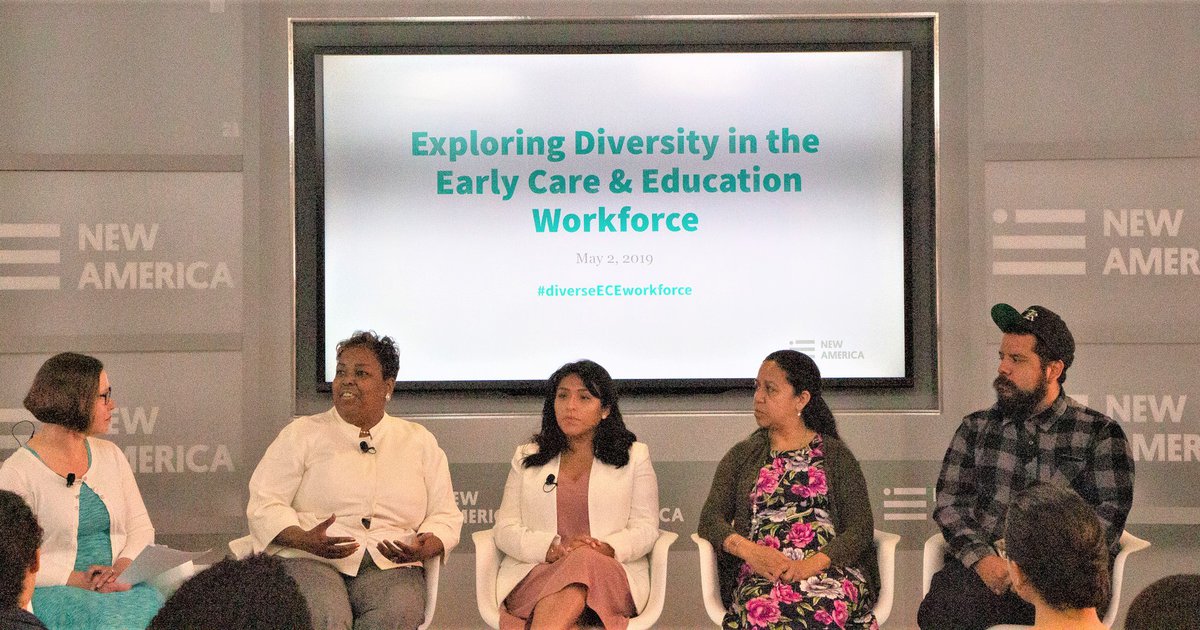
Equitably Expanding Educational Requirements: Insights from Diverse Early Educators
Educators of color who care for young children must be elevated throughout policy conversations to ensure equitable systemic change.